

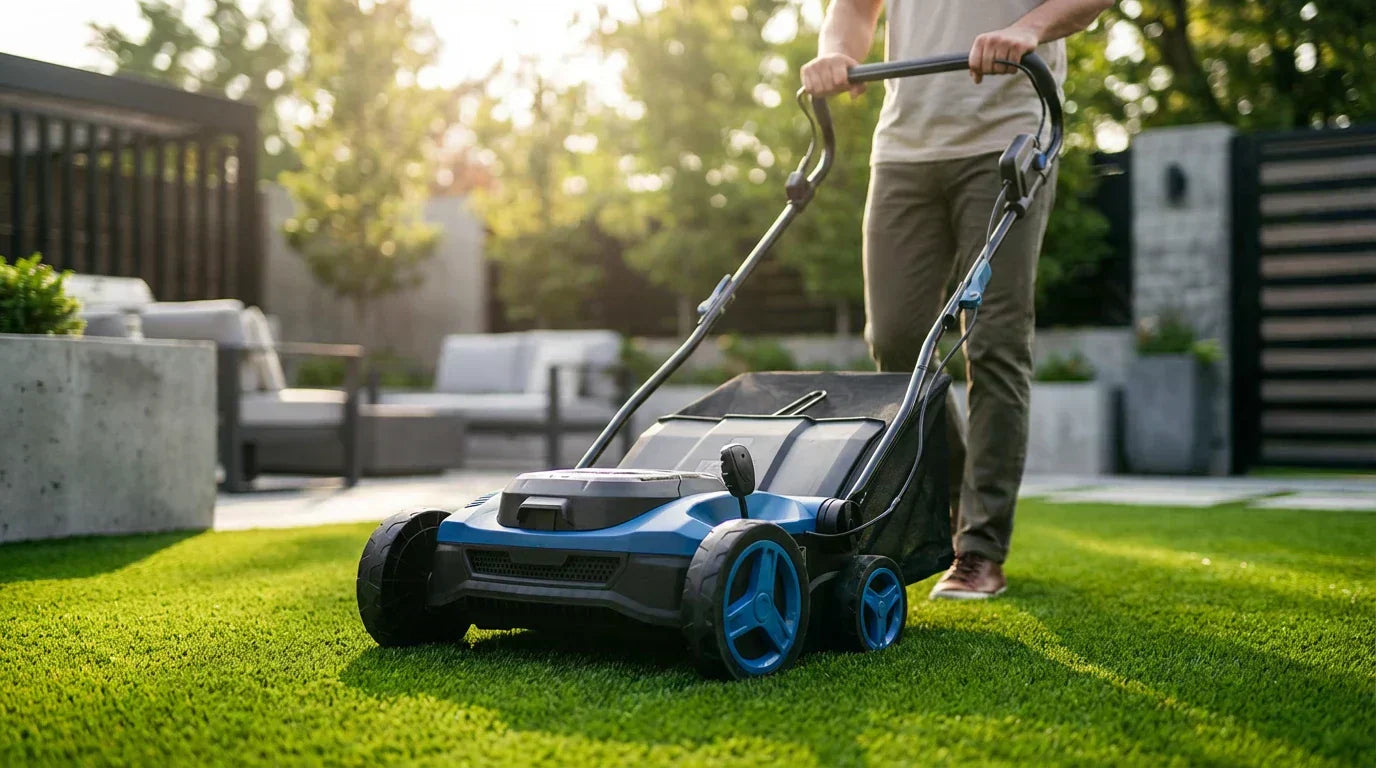
How a Turf Sweeper Restores Flattened Artificial Grass and Removes Debris
Artificial turf looks great when it’s clean and upright—but foot traffic, pets, and debris can quickly leave it looking flat and tired. A turf sweeper is designed to restore that fresh, natural look without damaging your lawn.

What Is an Artificial Turf Sweeper?
An artificial turf sweeper is a specialized maintenance tool built specifically for synthetic grass. Unlike standard lawn tools, it’s designed to gently lift turf fibers and remove debris without pulling, tearing, or damaging the turf backing.
Think of it as a grooming tool for your artificial lawn—restoring structure and cleanliness at the same time.
How Does an Artificial Turf Sweeper Work?
A turf sweeper typically uses rotating or reel-style brushes that glide across the surface of the turf. These brushes lift and separate flattened fibers while directing debris into a collection bag or tray.
This controlled motion allows the turf to be cleaned and refreshed in a single pass—something rakes and blowers struggle to achieve.
Why Does Artificial Grass Flatten Over Time?
Flattened turf is most common in high-traffic areas, under patio furniture, and where pets frequently rest or play. Over time, constant pressure pushes fibers down, causing an uneven, dull appearance.
Debris like leaves and pet hair can worsen the issue by trapping moisture, which may affect drainage and hygiene.
The Limitations of Rakes and Leaf Blowers
| Method | What It’s Good At | Common Downsides |
|---|---|---|
| Turf Sweeper | Lifts fibers and collects debris | Requires a dedicated tool |
| Leaf Blower | Moves loose debris quickly | Scatters debris and pushes particles deeper |
| Rake | Surface cleanup | Can fray fibers and disturb infill |
Benefits of Using an Artificial Turf Sweeper
Lifts matted blades for a fuller, more uniform appearance.
Removes leaves, pet hair, and dust instead of redistributing it.
Cleans large areas quickly with consistent results.
Designed for synthetic grass to reduce wear and damage.
Actionable Tips for Best Results
- Sweep weekly, or more often during heavy leaf seasons.
- Use light pressure—let the brushes do the work.
- Clear debris promptly after storms or pet activity.
- Adjust brush height to match your turf pile.
- Occasionally rinse turf to remove fine dust.
Conclusion
Artificial turf is a long-term investment, and proper care helps it look its best for years. A turf sweeper is one of the most effective tools for restoring flattened fibers, removing debris, and maintaining a clean, inviting lawn.
By understanding how turf sweepers work and using them regularly, homeowners can enjoy consistently fresh-looking artificial grass with less effort and less wear.








Share:
How to Revive Flattened Artificial Grass from Foot Traffic and Furniture