

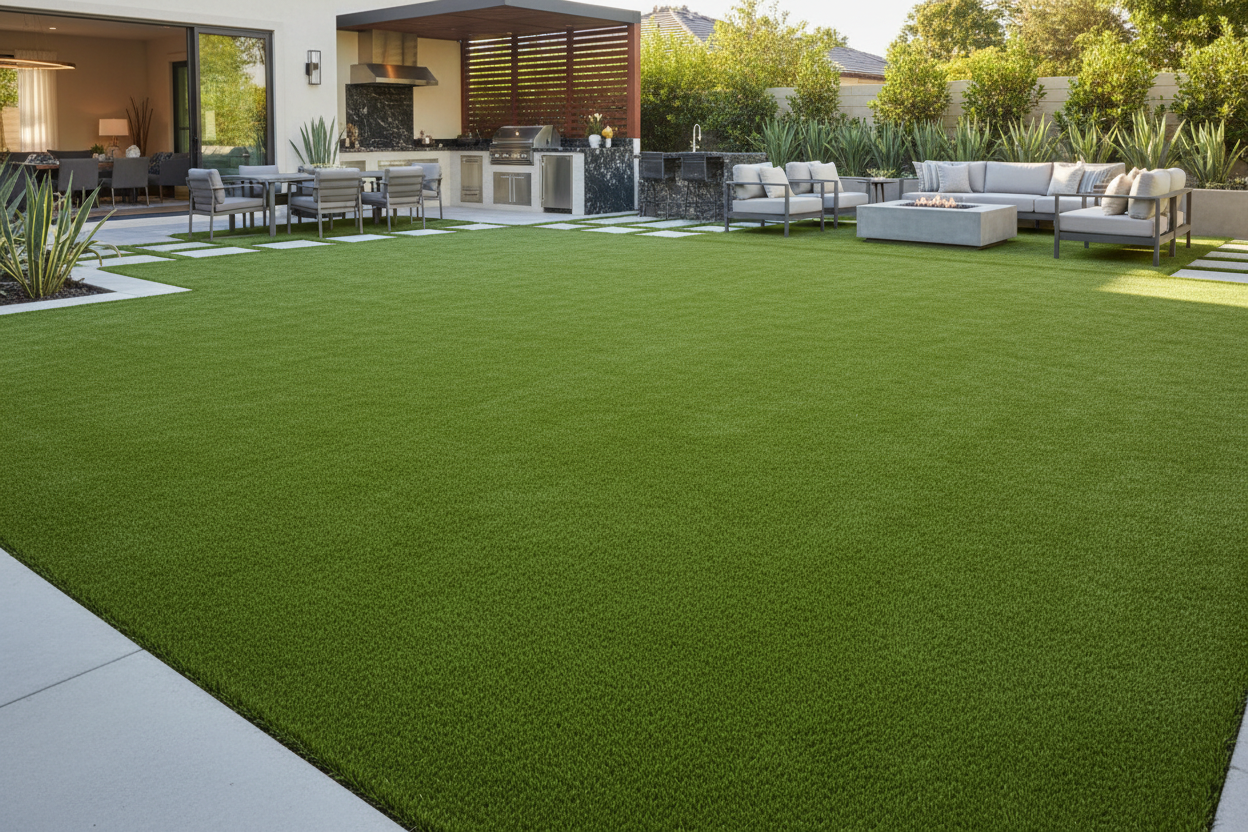
How to Revive Flattened Artificial Grass from Foot Traffic and Furniture
Flattened artificial grass is one of those problems that looks worse than it is, but often it just needs turf repair. Most of the time, the turf is not “ruined.” It’s simply compressed from repeated foot traffic, dog zoomies, patio chairs, or a grill that sat in the same spot too long.
The fix is usually mechanical: remove what’s weighing the blades down, lift the fibers back up, and make sure the base support (infill) is doing its job.
Why artificial turf mats down in the first place
Artificial grass blades bend, then rely on their shape and infill support to spring back. When the same area gets pressed day after day, the blades can develop a memory in the flattened direction, and debris can work down between the fibers, acting like a wedge that keeps everything pinned.
Furniture on artificial grass makes it more obvious because the pressure is concentrated at legs, wheels, and narrow bases. Foot traffic is slower and sneaky: paths from the back door to the gate, around a pool, or where kids line up to shoot hoops.
If you have pets, add another factor: hair plus fine dust can form a felted layer that holds the pile down.
A quick “what am I dealing with?” check
Before you start grooming, take 60 seconds to figure out whether you’re facing simple compression, embedded debris, or low infill.
Part the fibers with your fingers in a matted spot and look down toward the backing. If you see a lot of leaves, grit, or hair packed in, plan on debris removal first. If the fibers look long and floppy with little infill around their base, plan on topping up infill after grooming.
These quick clues help you pick the right level of effort:
- Bare or shiny backing visible
- Crunchy debris layer under the blades
- Leg-shaped dents from furniture
- “Traffic lanes” that look darker and smoother than the rest
Start with the easiest win: remove debris that’s weighing the turf down
Cleaning comes before fluffing. If you brush matted turf that’s full of leaves and grit, you can push debris deeper and make the area feel harder.
A leaf blower on a low setting can move loose debris off the surface, but it can also scatter material into beds or blow infill around if you get aggressive. A shop vacuum can work for small areas, though it is slow and can be awkward on larger lawns.
A purpose-built turf sweeper can simplify this step for artificial grass because it lifts and collects at the same time. TURFSPIN, for example, is a cordless artificial turf sweeper designed to pick up leaves, twigs, and pet hair while the brush system lifts the fibers. The key is setting the brush height so it contacts the pile without digging down into the backing.
One pass rarely fixes every problem, but one pass usually reveals what’s left: true matting that needs grooming, or low infill that needs support.
Reviving foot-traffic lanes without tearing up your turf
Traffic lanes respond well to repeated, light grooming. Think of it like resetting carpet pile rather than trying to rip it upright in one go.
- Work dry when you can. Wet debris clumps and adds drag, which makes grooming less effective.
- Brush against the grain. Turf has a “lean” direction from installation and use. Brushing against it stands blades up.
- Use steady, overlapping passes. Whether you’re using a stiff synthetic broom, a plastic-tined turf rake, or a powered brush, overlap a few inches each pass so you do not leave stripes.
- Change directions. A second pass at a 90-degree angle is often where the improvement becomes obvious.
If the turf is severely compressed, do two short sessions a day apart instead of one long, aggressive session. That gives the fibers time to rebound.
Fixing dents from patio furniture, grills, and planters
Furniture dents are usually localized, which makes them ideal for a targeted approach. Move the item, clean the dent area, then groom it before you put anything back.
If the blades of synthetic grass feel stiff and stay folded, warm water can help. Use lukewarm water, not boiling. Pour a small amount over the dent, wait a minute, then brush the area against the grain. The goal is to relax the fibers just enough that they respond to grooming.
For heavy items that must stay put, focus on weight distribution. A protective mat or a wider base under legs reduces how deep the turf compresses.
One sentence that saves turf: rotate furniture positions a few inches every couple of weeks.
Infill is the support system that makes “fluffing” last
Brushing lifts fibers, but infill helps them stay lifted. Over time, infill migrates, compacts, or gets carried away during rinsing and cleaning, especially in high-use zones.
If you brush and the turf looks better, then quickly mats again, low infill is often the reason. A light top-up of the original infill type (commonly silica sand in residential yards) can restore support at the base of the blades.
Spread a thin, even layer and work it in with a broom, brush, or sweeper until it drops down between fibers. Avoid dumping piles in one spot. The turf should not feel like a sandbox; it should feel stable, with the blades supported.
Tool options, compared side by side
Different tools solve different parts of the flattening problem. Here’s a practical comparison for homeowners and property managers.
|
Tool or method |
Best use |
Pros |
Watch-outs |
|---|---|---|---|
|
Synthetic stiff broom |
Small areas, touch-ups |
Low cost, good control |
Labor intensive on large lawns |
|
Plastic-tined turf rake |
Edges, corners, around furniture |
Reaches tight spots |
Avoid metal tines that can damage backing |
|
Leaf blower (low setting) |
Loose surface debris |
Fast for leaves |
Can scatter debris and move infill |
|
Warm water + brushing |
Stubborn dents |
Helps relax fibers |
Keep water lukewarm, avoid heat damage |
|
Walk-behind power brush |
Large lawns, heavy matting |
Strong lifting action |
Heavier, higher cost, can be too aggressive if misused |
|
Cordless turf sweeper (TURFSPIN-style) |
Routine debris pickup plus fiber lifting |
Collects debris while lifting; cordless; adjustable height; compatible with Makita 18V batteries |
Still needs technique; extreme compression may need infill or extra passes |
If you maintain turf regularly, convenience becomes the deciding factor. Tools that remove debris and lift fibers in one step tend to get used more often, which is what keeps matting from building up.
Match your approach to your turf fiber and pile height
Not all turf, including artificial grass, behaves the same. The more you know about what you have, the less likely you are to overwork it.
Polyethylene (PE) is common in residential lawns because it feels soft and generally rebounds well with grooming and proper infill support. Nylon is springy and durable, often used in higher-wear settings, and it typically responds well to brushing.
Polypropylene (PP) can be stiffer and may hold creases more easily, so use a lighter touch and avoid aggressive heat or harsh grooming.
Pile height matters as much as fiber type. Short piles pop back quickly. Medium piles look lush but need steady grooming. Long piles can look great, yet they are the most likely to trap debris and mat down if infill is low.
After you’ve revived the turf once, the smartest move is to adjust habits so you are not repeating a major rescue every month.
A simple upkeep rhythm that keeps turf standing tall
Consistency beats intensity. A quick routine prevents traffic lanes and furniture dents from turning into permanent-looking mats.
Aim for a schedule that fits how you use the yard:
- Weekly (or after heavy use): Quick sweep or brush against the grain in high-traffic areas
- Monthly: Inspect infill depth in paths and pet zones, then groom to redistribute
- Seasonal: Deep debris removal, rinse if needed, and a light infill top-up where the base looks thin
If you use a cordless sweeper regularly, set the brush height once, then keep it there unless you add infill or change turf areas. TURFSPIN’s adjustable height and large-capacity bag are built for this kind of repeatable routine, and the cordless setup avoids cords across patios and pool decks.
Common mistakes that keep turf looking flat
Most “failed fluffing” comes from a few predictable missteps.
- Too much force: Aggressive raking can stress fibers and loosen backing over time
- Wrong tools: Metal rakes and sharp tines can snag the turf backing
- Skipping the clean-out: Failing to brush out debris leads to matting returning faster
- Ignoring infill: Lifted blades fall back down when the base support is gone
If your turf still looks flat after grooming, treat that as a clue rather than a dead end. It usually means there is embedded debris, low infill, or a spot that needs a second pass from another direction.
When it makes sense to bring in professional help
Some lawns reach a point where DIY grooming is possible but inefficient. Large yards, heavy pet contamination, or turf that has been neglected for years can benefit from a professional service that power-brooms, removes embedded material, and resets infill more evenly.
Even if you do hire a service once, regular at-home grooming afterward is what protects that reset. A light, consistent routine is what keeps the turf looking like turf instead of outdoor carpeting.
Essential Tools for Grass Restoration
Reviving flattened artificial grass begins with understanding the root cause—typically a mix of foot traffic, furniture weight, or pet activity. Synthetic grass naturally withstands many elements, but concentrated pressure can compress the turf fibers over time.
Homeowners can take charge by removing any obstructing items and thoroughly cleaning the grass. Initial steps often involve using a low-setting leaf blower or shop vacuum to clear loose debris. Dedicated tools like a cordless turf sweeper can simplify this process, efficiently lifting and cleaning without harming the turf.
Next, grooming the turf is vital to restore its upright appearance. Employing a stiff brush or turf rake to brush against the grain helps lift fibers. For persistent flattened areas, a light spray of lukewarm water can soften the fibers, making them more pliable for brushing.
If regular grooming does not solve the issue, consider topping up the infill, as it's crucial for supporting the blades and maintaining their posture. Utilize a spreader for even distribution of the original infill type, ensuring your artificial grass retains its lush, durable look.
FAQ on Reviving Flattened Artificial Grass
Artificial grass is a durable and low-maintenance option for many homeowners, but it can become compressed over time due to foot traffic, furniture, and pet activity. Here are answers to common questions about reviving your artificial turf.
How can I tell if my artificial grass needs reviving?
Look for areas that appear matted, have visible debris, or lack infill. Signs include leg-shaped dents from furniture or visible paths from foot traffic.
What tools can help rejuvenate flattened turf?
Use tools like a synthetic stiff broom, plastic-tined rake, or a cordless turf sweeper to lift fibers while removing debris.
Should I remove debris before fluffing the grass?
Yes, always clear debris first using a low-setting leaf blower or shop vacuum to prevent pushing debris deeper into the turf.
How does infill affect the turf revival process?
Infill supports turf blades. Low infill can cause fibers to stay flattened. Topping up infill after fluffing helps maintain an upright position.
What’s the best way to deal with persistent dents?
Apply lukewarm water to the dented area to relax fibers, then brush against the grain to restore the pile.
Are there any common mistakes to avoid?
Avoid using excessive force, incorrect tools, skipping debris cleaning, and neglecting infill, as these can hinder restoration efforts.
When should I consider hiring a professional service?
Consider professional help for larger lawns with extensive flattening or heavy pet contamination. They can remove embedded debris and reset infill efficiently.








Share:
How an Artificial Turf Sweeper Restores Flattened Grass and Clears Debris
Creating an Effective Artificial Turf Maintenance Schedule