

Artificial Turf Maintenance Schedule: The Complete Homeowner’s Guide
Artificial turf can feel like a maintenance-free win until the first windy week, a muddy dog sprint, or a fall leaf drop reminds you that synthetic grass is low maintenance, not no maintenance. The good news is that a simple schedule keeps it looking upright, clean, and ready for everyday life.
A consistent routine also prevents the two issues that make turf look “tired” fast: flattened fibers in traffic areas and organic buildup (leaves, dust, pollen, pet hair) that can hold moisture and create odors.
Why a schedule works better than “when it looks bad”
Most turf problems start small. A thin layer of debris works its way down between fibers, and once it mixes with moisture it becomes harder to remove. The same goes for matting: a few flattened paths become permanent-looking if you wait months to brush them out.
A routine maintenance schedule keeps tasks short. Ten minutes weekly beats an hour-long cleanup that still never fully lifts the pile back up.
The core artificial turf maintenance calendar
Use this as a baseline, then adjust based on shade, pets, nearby trees, and how often the yard is used.
Frequency |
What to do |
Why it matters |
Typical time |
|---|---|---|---|
1 to 2 times per week (or weekly/biweekly) |
Remove loose debris, quick groom of traffic zones |
Prevents organic buildup and early matting |
5 to 15 minutes |
Every 1 to 2 weeks |
Light rinse with a garden hose |
Flushes dust, pollen, and pet residue |
5 to 20 minutes |
Monthly |
Full brushing against the grain, edge and seam check, deeper rinse |
Restores fiber “stand-up” and catches small issues early |
20 to 60 minutes |
Seasonally |
Spring reset, summer dust control, fall leaf control, winter snow care |
Matches the biggest weather-driven demands |
Varies |
As needed |
Spot clean spills, sanitize pet zones, remove weeds |
Stops stains and odors from setting in |
5 to 30 minutes |
If you only remember one thing: frequent light cleanups keep the turf surface open so rinsing and grooming actually work.
Weekly or biweekly: your “keep it tidy” routine
Start with debris removal. Leaves, twigs, seed pods, and pet hair are the usual culprits. Clear them before they break down or get walked into the turf.
Then do a quick groom in the areas that get crushed: the path from the door to the gate, around play equipment, near grills, and anywhere pets tend to pace. Brushing against the natural lay of the fibers lifts them back up and keeps the surface looking full.
Rinsing fits nicely into this same cadence. A light hose rinse every week or two helps with dust, pollen, and pet urine, especially in dry climates or during allergy season. Use a spray nozzle and aim the water so it follows the yard’s drainage path instead of pooling.
In busy weeks, even a fast pass that lifts fibers and collects debris at the same time can keep you on track. Purpose-built tools like TURFSPIN’s cordless artificial turf sweeper are designed to do both in one pass by lifting matted fibers while collecting leaves, twigs, and pet hair into a large bag. That can be helpful when you want to avoid dragging out cords, relying on blowers, or chasing debris around the yard.
Monthly: the reset that keeps turf looking “newer”
Once a month, plan for a deeper grooming session across the whole turf area, not just the traffic lanes. Work in overlapping passes and brush against the grain to lift the pile evenly. If your turf includes infill, this monthly brush also helps redistribute it so the lawn feels consistent underfoot.
After grooming, rinse more thoroughly than your quick biweekly rinse. A garden hose with a stronger spray is often enough. If you use a pressure washer, treat it like a rinse, not a stripping tool: use a wide-angle spray, keep distance from the surface, and avoid concentrating water on seams and edges.
This is also the right time to walk the perimeter and check details that are easy to miss day to day. Look for lifted edges, separating seams, or low spots where water lingers. Catching these early prevents bigger fixes later.
Seasonal maintenance: adjust to your yard, not the calendar
Seasonal work is mostly about dealing with what nature drops on your turf.
Spring: clear, lift, inspect
Spring is the best time for a full “wake up” after winter. Remove leftover branches and winter debris, then groom the entire lawn to restore fiber volume. Spend a few minutes checking drainage and shaded corners where moss or algae can start if debris sat too long.
Summer: dust control and surface comfort
In summer, synthetic turf often looks clean but still needs rinsing. Dust and pollen settle deep, and pet areas can develop odor faster in heat. A weekly rinse can help, and it also cools the surface slightly for bare feet and pets.
If you notice infill clumping or shifting, brush and redistribute it. Heat and heavy foot traffic can move infill around, which changes how the turf supports the fibers.
Fall: leaf management is the job
Fall is when “low maintenance” turf can turn into daily cleanup if you have trees nearby. Leaves trap moisture, and damp organic litter can encourage algae and odors.
Plan to remove leaves often, especially after rain. A sweeper that captures debris instead of scattering it can make fall care faster because you are not pushing leaves into corners.
Winter: snow and ice care without damage
If you get snow, skip metal tools and harsh ice products. Use a plastic shovel, a broom, or a blower to remove snow when practical. If snow compacts and freezes, avoid chipping at it. Let it thaw, then groom the fibers back up.
Avoid rock salt and similar deicers near turf. They can be rough on materials and can also wash into nearby landscaping.
Pet owners: build a mini-schedule for pet zones
Pet turf stays nice when you treat it like a high-traffic surface, because that’s what it is.
Pick up solids right away. For urine, the simplest habit is a quick rinse after heavy use or at least a few times a week in the main pet area. That routine is often enough to prevent odor, especially when the base drains well.
If odor shows up, mechanical cleaning still comes first: remove debris and hair, rinse, then groom. After that, use a pet-safe enzyme deodorizer when needed and follow it with a rinse so residue does not hold grime.
A quick “pet zone check” is also a good way to spot matting early. Dogs often create repeat paths, and those spots respond best to frequent light grooming instead of occasional aggressive brushing.
Fiber type and infill: how they affect your schedule
Not all synthetic grass behaves the same. Knowing what you have helps you decide how often to groom and how gentle to be.
Nylon tends to be very durable and often tolerates regular brushing well, though it still benefits from routine grooming to stay upright. Polyethylene is popular in residential lawns for its soft feel and realistic look, and it responds well to steady brushing and rinsing. Polypropylene is typically less UV-stable and can show wear sooner, so staying consistent with cleaning and avoiding heavy abuse matters more.
Infill plays a big role in how turf looks and feels. If your turf uses infill, your schedule should include occasional redistribution. When infill migrates, fibers lose support and flatten faster. You do not need to top up often in most yards, but you do want to keep it even.
Tools and products: what helps, and what to skip
The safest maintenance approach is mostly mechanical: remove debris, lift fibers, rinse. Keep chemicals limited to targeted needs like enzyme treatments in pet areas or turf-safe moss control in shaded spots.
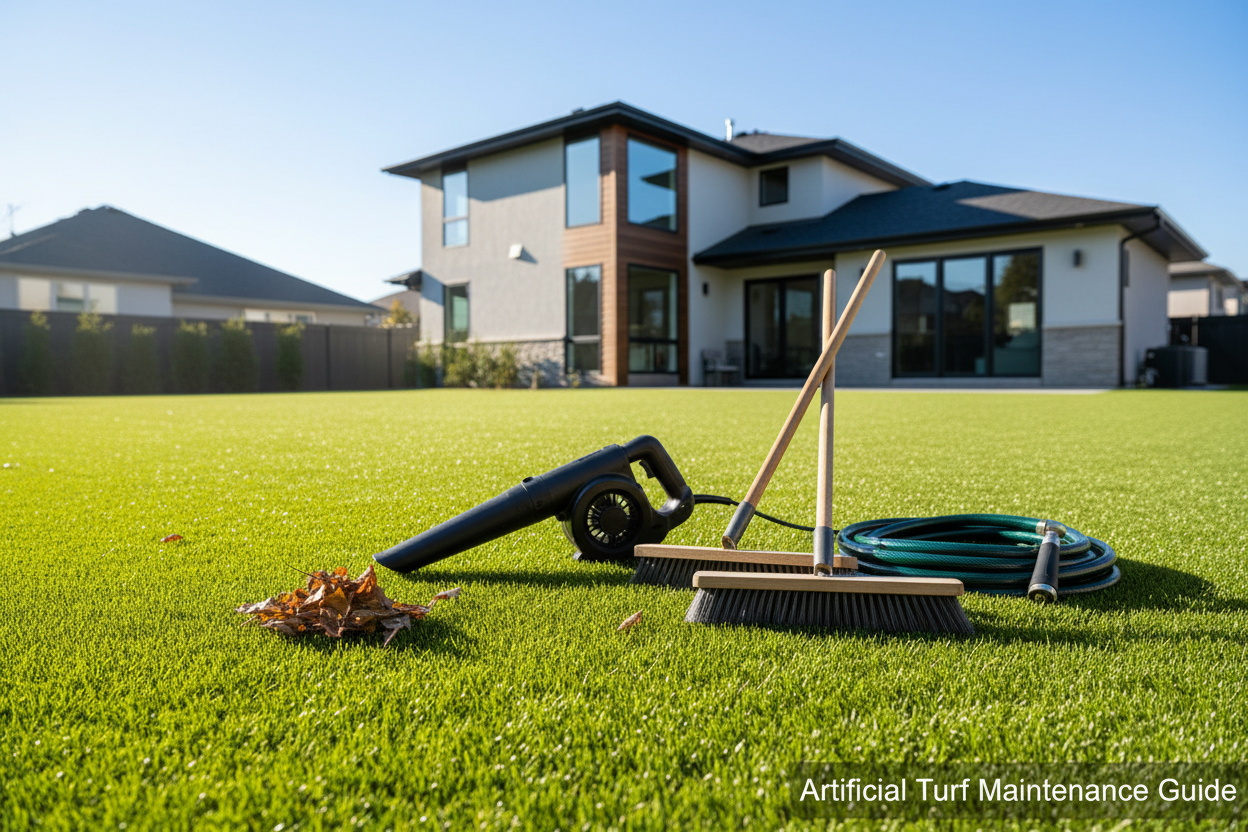
Here are a few homeowner-friendly items to keep on hand:
- Leaf blower (low setting)
- Plastic leaf rake
- Stiff synthetic push broom: for grooming and lifting fibers
- Garden hose with spray nozzle: for dust, pollen, and urine rinsing
- Pet enzyme deodorizer: for occasional odor control
Just as important is what not to use. Many turf issues come from tools that are too aggressive.
- Metal rakes: can snag fibers and damage the backing
- Harsh cleaners: bleach, strong solvents, and acids can discolor fibers
- Narrow pressure tips: can displace infill and weaken seams
If you want a faster routine with fewer separate tools, a purpose-built artificial turf sweeper can combine debris pickup and fiber lifting. TURFSPIN’s cordless model is built for that one-pass approach and is battery-compatible with Makita 18V packs, which is useful if you already own that platform.
A practical “real life” schedule you can actually keep
Some households do best with set days rather than vague frequency. If you want something simple, try this:
- Every Saturday: quick debris pass plus grooming in traffic zones
- Every other Saturday: add a light rinse
- First weekend of the month: full groom, edges and seams check, deeper rinse
- Fall season: add one extra debris pass midweek when leaves are dropping
If your yard is shaded, add an extra quick check for slick spots or green film in corners. If you have dogs, treat the main pet area like a priority zone and rinse it more often than the rest of the lawn.
The schedule is not about perfection. It is about staying ahead of matting and buildup so your turf stays clean, upright, and easy to enjoy week after week.
Artificial Turf Maintenance: FAQs
Maintaining artificial turf may seem daunting, but with a consistent schedule, it stays in great shape. Here are some quick answers to common questions about keeping your synthetic lawn looking its best.
How often should I clean my artificial turf?
A quick debris removal and grooming once or twice a week is typically enough to keep your turf tidy. Add a light rinse every other week for best results.
Is rinsing my turf necessary?
Yes, rinsing helps remove dust, pollen, and pet residue, keeping your turf clean and free from odors.
What tools are best for turf maintenance?
Use a leaf blower, a stiff synthetic push broom, and a garden hose with a spray nozzle. Avoid metal rakes and harsh chemicals.
How do I prevent odors in pet areas?
Regular rinsing and using a pet-safe enzyme deodorizer can help control odors. Clean pet areas more frequently, ideally a few times a week.
Can I use a pressure washer on my turf?
If necessary, use a wide-angle spray, maintain a safe distance, and don't focus water on seams to prevent damage.
Do I need to add infill regularly?
Routine brushing should redistribute infill properly. You only need to top up infill infrequently unless you notice uneven spots.
What should I do if snow covers my turf?
Use plastic shovels or a broom to gently remove snow. Avoid using salt or harsh ice-melting products.
Why is a maintenance schedule important?
A schedule helps prevent issues like matting and organic buildup before they become significant problems, keeping your turf looking fresh and new.








Share:
How to Revive Flattened Artificial Grass from Foot Traffic and Furniture